Blog
Dental hygiene tips for healthy teeth & gums
Dental Crown vs. Filling: Which One Does Your Tooth Need?
Most patients who come in expecting a filling leave with one. A few don’t, and that’s always the harder appointment. The dental crown vs. filling call gets made on things the patient can’t see, so my recommendation lands without the ten minutes of context I’ve been building in my own head.
It’s rarely a choice I hand over. The answer comes from how much natural tooth is left and where that structure sits. Most of the time there’s enough, and we fill it. When there isn’t, I owe you the reasoning behind it.
TL;DR
- The difference is where the restoration sits. A filling goes inside the tooth. A crown goes over the top of what’s left.
- I’m weighing how much natural tooth remains and where it sits. Cost doesn’t enter the dental crown vs. filling decision.
- A filling placed in a tooth that needed a crown usually holds for a while, then fails in a bigger way than the crown would have.
- Undermined cusps and teeth that have had root canal treatment sit firmly on the crown side.
- Most cavities are fillings. The crown conversation comes up far less often than patients expect.
What a Filling Actually Does
A filling replaces the part of the tooth that decay took away. I clear out the softened material, clean and shape what’s underneath, then bond the restorative material into the space. Composite resin is what I reach for most often. The tooth gets its shape and its chewing surface back.
For that to hold up over years, the natural tooth around it has to do the work. What I’m looking at is wall thickness. A thin wall flexes under a bite. Flex it enough times, and the seal at the margin gives way, and decay works back in underneath.
Given that, a filling is the right call. Less drilling and less money, done in one visit. Take those conditions away, and it still goes in fine. It just doesn’t last. The walls flex, a crack starts somewhere I can’t see, and I’m looking at the same tooth again in three years with a harder job ahead of me.
What a Crown Actually Does
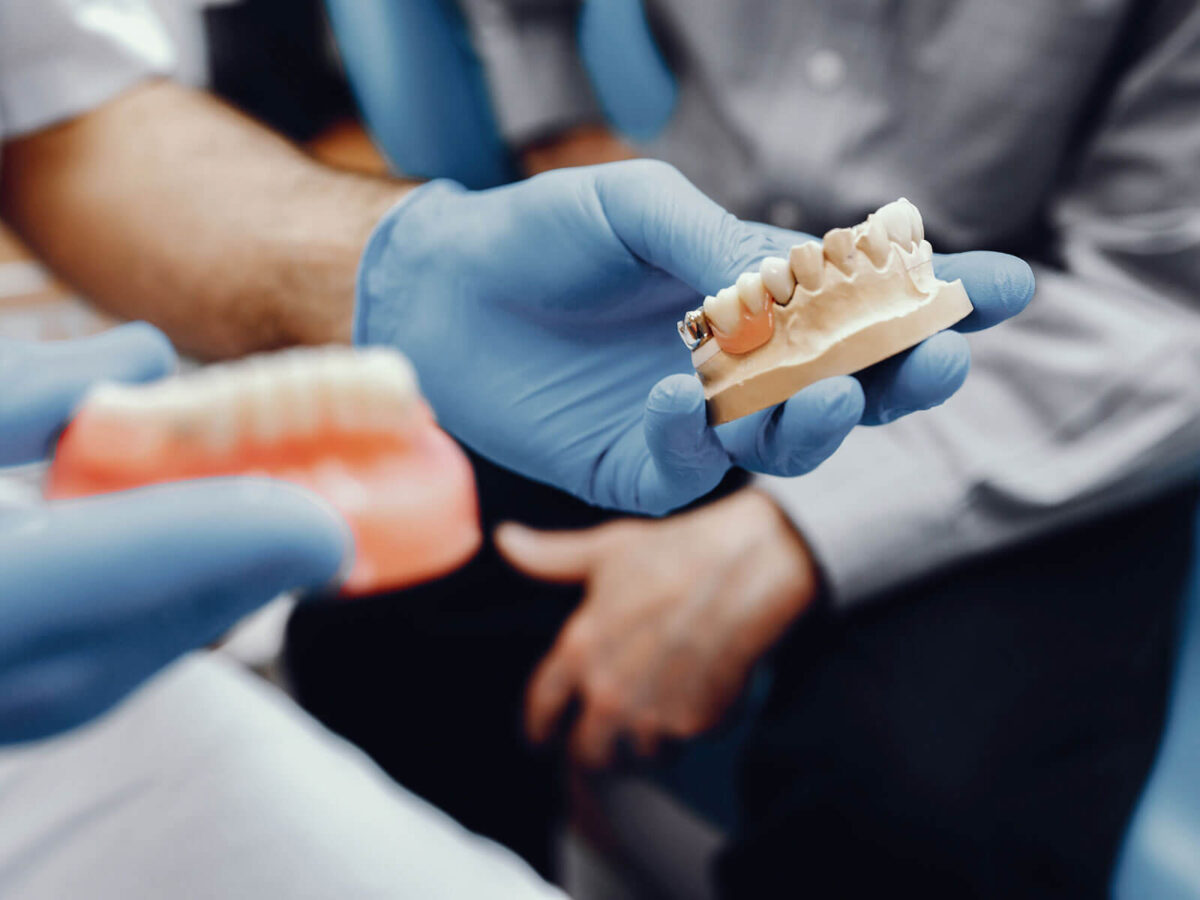
A crown goes over the whole tooth – everything you can see above the gum. I reduce what’s left of the natural tooth down a little, take an impression, and the crown gets made to fit over it like a cap. Chewing force then travels through the crown instead of through the walls that are left.
Patients call it a bigger filling. I understand why. The mechanics are nothing alike, though. A filling needs the walls around it to hold it in place, so thin walls are a problem from the start. Wrap a crown over the top, and those same walls stop carrying anything.
The ADA puts cracked teeth, heavy decay, and teeth that have had root canal treatment on the crown list. Every one of them describes a tooth that has already given up more structure than a filling can work around.
How Do I Decide Between a Dental Filling vs Crown
Nothing about this comes down to one measurement. I’m putting several things together at the exam, and they all point to the same question. Can what’s left of this tooth hold a filling?
Remaining tooth structure
This is the first thing I look at. If most of the natural tooth is still there, we fill it. Once decay and old restorations have taken out something like half the tooth, I start thinking about a crown. There’s no exact number I’m measuring to. It’s a judgment about whether enough wall is left to grip a filling and carry the load.
Cusp integrity
Cusps are the raised points on the biting surface of your back teeth, and that’s where force concentrates. Decay underneath one can hollow it out while the surface still looks perfectly fine. Put a filling in, and that cusp snaps eventually, usually on something that shouldn’t have broken anything. Covering it is the only way I know to stop that.
Crack lines
Small cracks I’ll often watch. A crack that’s run into the dentin, or one that hurts when you bite down and again when you let go, has to be held together from the outside. Filling material won’t do that. It sits in the crack. It doesn’t close it.
A history of large fillings
Every time a filling gets replaced, a little more natural tooth goes with it. Far enough down that road and the walls are too thin to take another one. The earlier fillings did their job. There’s simply less tooth to work with each round.
After a root canal
The pulp comes out through an opening cut in the top of the tooth, and whatever sent you for the root canal has usually taken structure with it. Back molars in that position get crowned almost every time in my chair. I’ve seen the ones that didn’t.
What Happens When a Filling Is Placed on a Tooth That Needs a Crown
These are the appointments I least enjoy.
A filling in a tooth that couldn’t support it holds for a while. Months usually, sometimes a few years. Then the undermined cusp goes, often halfway through a meal, on something soft enough that nobody sees it coming. Other times the walls flex until the seal breaks down and decay works its way back underneath.
Where the fracture runs decides what I can do next. High enough and I can still crown it, though I’m working with less tooth than I had when I first brought the crown up. Below the gumline, the tooth may be past saving.
The filling looked like the smaller decision at the time. I’ve had that conversation enough times now that I say the quiet part at the first appointment.
What About What Is a Dental Crown vs Filling in Terms of Cost
Cost is the most common reason a patient pushes back on a crown, and it’s a fair thing to raise with me.
A filling sits near $250 for most people, more if it covers several surfaces. A crown is a different order of magnitude. Somewhere around $1,500, moving with the material and the lab.
Those two numbers aren’t the whole comparison. Neither one counts the filling failing on a tooth that needed the crown. You’re back in for an emergency appointment, then a crown on whatever tooth is left. If the fracture runs deep enough, an extraction and an implant after that.
Insurance usually covers part of a crown as a major restorative procedure. How much depends on your plan and what you’ve already used against the annual maximum.
Not Sure Which One You Need?
Fifteen minutes and an X-ray usually answer it.
FAQ
Why can’t I just get a filling?
Because a filling needs enough tooth around it to hold onto. Once that’s gone, there’s nothing for it to grip, and the walls end up carrying a load they can’t take. A crown covers what’s left instead of sitting inside it.
How do you decide which one I need?
Mostly by how much solid tooth is left once the decay is cleared out. I can’t always tell before I start. A cusp that turns out to be hollow underneath, or a crack heading down into the dentin, will make the call for me.
What happens if a filling is placed when a crown is needed?
It holds for a while. Then the unsupported part fractures, usually while you’re eating something. Sorting that out costs more than the crown would have.
Is a crown always more expensive?
Upfront, yes. A filling sits near $250, a crown around $1,500. If the filling fails on a tooth that needed a crown, you pay for both and then for whatever the fracture leaves behind.
Conclusion
What the tooth can carry is what makes the call. Nothing else in the conversation changes that. A filling with solid structure behind it will outlast most of what you worry about. The ones I end up redoing are the ones that never had that structure to begin with.
When I recommend a crown to someone who came in expecting a filling, it’s because the tooth has crossed from needing repair to needing cover. Ask me what I’m seeing. I’d rather put the X-ray on the screen than have you leave unconvinced.
If you’re in Victoria and you’ve walked out with a crown recommendation you weren’t expecting, ask for the findings behind it. Any dentist should be able to point to the exact thing that changed their mind.
See What Your Tooth Needs
An exam shows what your tooth can support before anything gets decided.