Blog
Dental hygiene tips for healthy teeth & gums
What Are Screwless Dental Implants? How They Work, Benefits, and Drawbacks
Dental implants have leaned on a screw for decades to keep the crown anchored. It works, but it comes with a cost: a small access hole drilled through the tooth, filled in afterward, sometimes visible if you know where to look.
Screwless dental implants exist to get rid of that hole. The idea sounds simple on the surface, but the mechanics underneath and the trade-offs that come with them are worth understanding before assuming “screwless” automatically means better.
What Really Are Screwless Dental Implants
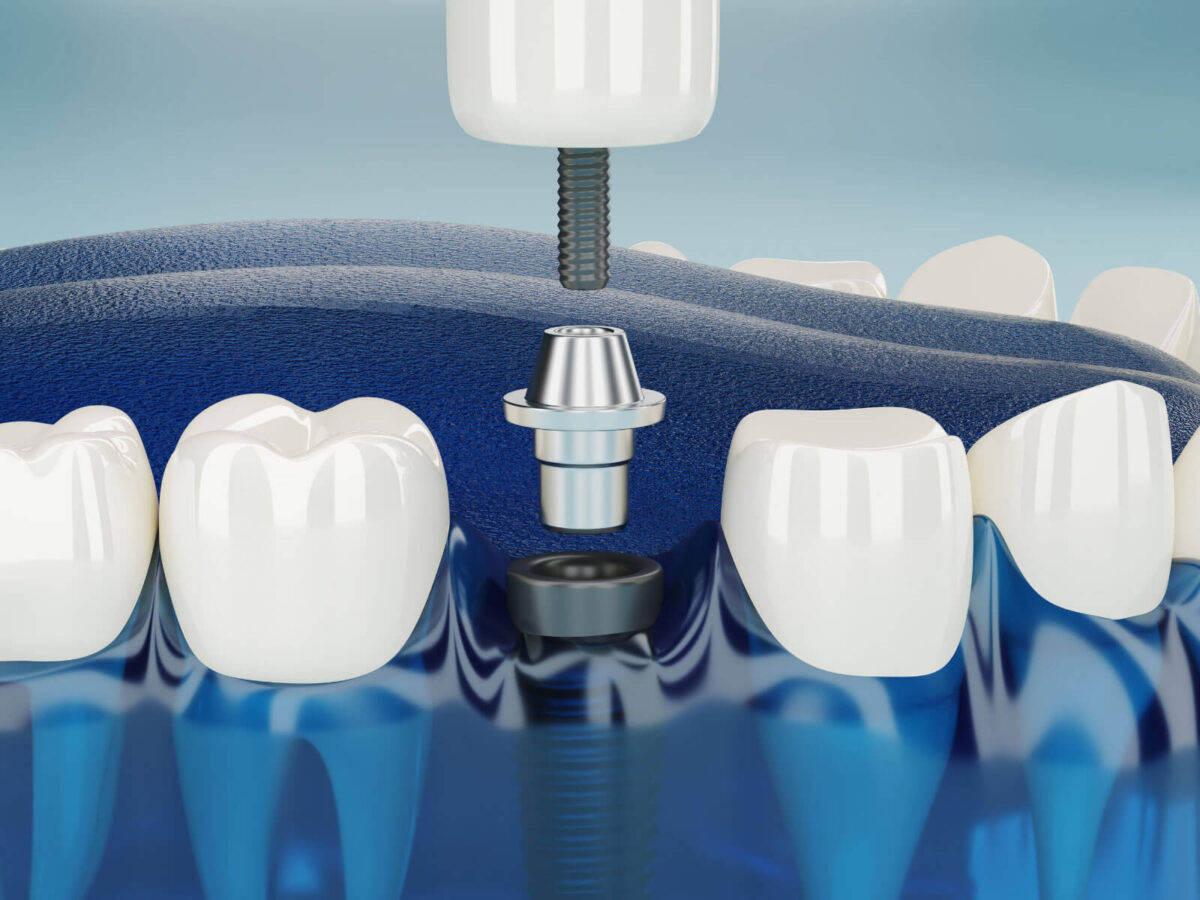
The clinical name for this is a cement-retained implant crown, and “screwless” is really the marketing shorthand for it. Instead of a screw running through the crown into the abutment underneath, the crown gets bonded directly onto the abutment with dental cement.
The titanium post that gets placed into the jawbone doesn’t change. That part of the surgery is identical to a standard implant. What changes is the very last step, how the visible crown gets attached once healing is complete.
Research comparing the two retention types, published in the Journal of Pharmacy and Bioallied Sciences and indexed on PMC, frames screw-retained and cement-retained crowns as the two main options in implant-supported restorations, each with a distinct set of clinical trade-offs. That’s really the honest answer to “what are screwless dental implants”: a different attachment method, not a different implant.
How Do Screwless Dental Implants Work Step by Step
The surgical phase looks no different from a traditional implant. A titanium post gets placed into the jawbone, and over the following months, the bone fuses to that post through osseointegration.
Once healing is confirmed, an abutment gets connected to the implant post. This is the small connector piece that the crown will eventually attach to, and in most systems, it’s still secured with an internal screw at this stage.
The final crown is where the two methods split. A traditional crown gets screwed onto the abutment through a small access channel, which then gets sealed with filling material. A cement-retained crown skips that channel entirely and gets bonded directly onto the abutment with dental cement, leaving no visible hole anywhere on the tooth, which is really the whole mechanism behind “how do screwless dental implants work”.
What Actually Happens to the Screw
Calling these implants “screwless” oversells the name a little. A screw is often still involved somewhere in the system, typically at the point where the abutment connects to the implant post itself, buried well below the visible crown.
What disappears is the screw that runs through the crown and requires an access hole on the biting surface. That’s the part patients see, and the part the term “screwless” is really describing when people search for “what are screwless dental implants,” expecting no hardware at all.
What Are the Benefits Worth Knowing About
The main draw is appearance. Without an access channel to fill and seal, the crown surface stays uninterrupted, which matters most on front teeth where a small filled patch would otherwise be visible when someone smiles or talks.
There’s also a mechanical upside documented in the research. The same PMC-indexed study found screw loosening occurred in 18 percent of screw-retained crowns compared to 4 percent of cement-retained ones over a 12-month follow-up, a statistically significant difference. A crown that isn’t held by a mechanical screw simply has one less way to work itself loose over time.
A separate systematic review reached a similar conclusion from a different angle, noting that technical complications were more often tied to screw-retained designs, while a different category of problems tended to show up more with cement-retained restorations instead. Between the two studies, the case for screwless dental implants on the mechanical side holds up better than the marketing angle alone would suggest.
What Nobody Mentions About the Trade-Offs
That different category of problems is worth spelling out. The same review found that biological complications, including bone resorption and tissue inflammation, were more frequently linked to cement-retained implants, largely tied to leftover cement that hadn’t been fully cleaned out from around the gumline.
The original 12-month study backs this up with numbers. Cement washout occurred in 14 percent of cement-retained crowns versus 2 percent of screw-retained ones, and marginal gaps, small spaces where cement or bacteria can collect, showed up in 20 percent of the cement group compared to 8 percent of the screw group.
There’s a bigger structural issue too. Cemented crowns are bonded on, not screwed on, which makes them considerably harder to remove if a repair or adjustment is ever needed. A screw-retained crown can typically be taken off in minutes. A cemented one sometimes can’t be removed without damaging it.
A five-year randomized study following 44 patients found this played out clinically as well: eight restorations were lost to complications over the study period, with biological failures showing up only in the cemented group, according to the comparison published on PMC. These are the numbers worth sitting with before assuming screwless dental implants are a straightforward upgrade over the traditional design.
What Do the Reviews and the Research Say
Reviews from patients tend to focus on appearance, and on that front, satisfaction runs high. A crown with no visible hole simply looks more like a natural tooth, and most people notice that difference immediately.
A case-control study on bone loss found screw-retained restorations held onto more marginal bone than cemented ones, at both measured points. Both types still looked about the same and had similar success rates overall.
Taken together, the research reads as a trade-off rather than a clear winner. Fewer loosening issues and a cleaner look on one side. A higher chance of hidden bone or tissue complications on the other, the exact thing screw-retained designs tend to avoid. That’s roughly what patient reviews leave out.
Who’s a Strong Fit for This Option
Front teeth are where this option gets recommended most often, since the cosmetic benefit matters more in a spot everyone sees when a patient smiles. Back molars, which take on more chewing force and are rarely visible, don’t carry the same aesthetic argument.
Bone quality and available space play a role too. A dentist evaluating this option needs enough vertical room for the cement layer and needs to be confident that excess cement can be fully cleaned out during placement, since that residue is where most of the documented complications trace back to.
Anyone with a history of gum sensitivity or prior peri-implant issues is generally a stronger fit for a screw-retained design, simply because it’s easier to inspect and maintain over time without needing to remove the crown itself, which is the kind of trade-off worth raising before assuming screwless dental implants are right for every case.
FAQ
Are screwless dental implants screw-free?
Mostly a marketing name. A screw usually still sits below the gumline, connecting the abutment to the post. What disappears is the one running through the visible crown.
Do screwless implants last as long as traditional ones?
Survival rates land in a similar range either way. What differs is how each one tends to fail, loosening on the screw side, and cement-related tissue problems on the other.
Are screwless implants harder to fix if something goes wrong?
Usually. Getting a cemented crown off without damaging it takes real effort, unlike a screw-retained one, which just unscrews.
Do screwless dental implants cost more?
Not by much, since the titanium post and most of the lab work are identical either way.
Conclusion
A screwless implant doesn’t remove risk; it just relocates it. Fewer loose crowns, a better look on front teeth, and in exchange, cement that has to be cleaned out perfectly and a crown that’s a real pain to remove later if something goes wrong.
Bring this up directly at the consultation. What happens to leftover cement, how much room the case has for it, whether removal down the line would damage the crown, that conversation says more about whether screwless dental implants fit your case than the word “screwless” ever will.